
The lifeblood of a story. Probably one of the only we reasons we read a story. Which means you need to get them spot-on. Welcome to the
post one: How To Liven Up Your Leader Character
post two: How To Liven Up Your Mentor Character
post three: How To Liven Up Your Villain Character
post four: How To Liven Up Your Secondary Character
post five: How To Liven Up Your Main Character


1. Diverse Backgrounds - And Diversity In General

Sit down in a busy place, and take a look around. No one is alike - whether it be in looks, personality, or background. This is how it should be in books, and this is how you want it to be with your own characters.
I can't pinpoint a book that's super diverse (at the moment - I'm sure my goldfish brain will think of one right after I hit 'publish' on this post), but in my own novel, Killing Snow, I try as well as I can to make everyone unique. There's people of different races, people with disabilities, people with personalities and interests spread across the whole board. And one of the books I'm currently working on has a main character that's from Saudi Arabia (but of course plot bunnies are still attacking me left, right, and center - so we'll see how long said story sticks around xD).
I've found that a lot of races aren't represented in YA books. Maybe it's just the books I've read, but it certainly seems that way to me. And I rarely see people with certain disabilities in books. People aren't all the same, so you need to keep your characters from always being the same, too.
2. Not Having Too Many, And Knowing When To Introduce Them

Take the Lunar Chronicles, for instance. Marissa Meyer not only balanced her character amount perfectly, she also knew when and how to add them in. Marissa didn't dump a dozen characters on us at once. And that was perfect, because it gave us time to get well and fully attached to her entire cast. By the end of the series, she had quite a few characters in her series, but she'd placed them in so carefully that we were able remember who each of them were. Dumping a bunch of characters on readers from page one does exactly the opposite - readers will get characters confused (especially if names are too similar, so watch out for that), and it's harder to get attached until much later in the book.
So how major characters does your book have? Did you throw them all in at once, or did you space them out? Try having a friend read it, and ask them if they can pinpoint and remember the characters you introduce.
3. Uniqueness
If you have a cast of characters and the characters are all too alike, your readers are probably going to get bored. You need to keep each character unique, not only because readers love unique characters, but unique characters can be the heart of a story.
Uniqueness normally comes in two different ways - there's unique as in 'all your characters are different from each other' and there's unique as in 'big personalities'. It's a good thing if your book has both, because readers love it.
The Wingfeather Saga has some of the most unique characters out there, in my opinion. It's not a super well-known series (and the first book starts out a bit childish, but oh my does the series hit epic levels later on), but the characters are amazing. Every single one of them is very different - in very unique ways, what with some of them having very big personalities - and they all play different roles in the series. This series scores high on the uniqueness scale.
So, how well are you doing this with your book? Don't insert two characters where only one is needed - if two characters are too alike, and it wouldn't hurt your story to cut one, then cut one. Sometimes less is more. And it's a good idea to give at least one of your characters a big personality - one that's either sarcastic, flat-out crazy, or one of those "adorable cinnamon roll" characters, etc. Those are always tons of fun ;).
4. Realism

There's one thing that I especially hate in stories - when one character kills another, and they don't have any feelings over it. No. No. Maybe this could work if your character shoot another over a long distance, but if they're near each other? Then no. This is not normal, and this is not human. Please don't do this. If your character kills someone else, they are going to think about it, and they're probably going to stress over it, and that moment might replay in their nightmares for years. The first day they took a life with their own hands isn't something they're going to forget. It's things like this that you need to look for, and make more realistic.
Another thing that's unrealistic in story is what isn't mentioned. Your character is human, and humans get hungry. Humans get sick. Humans have days where they're angry for no reason. And your character needs to be human - we need to connect with them! So make sure that they're realistic and enough for us to relate to, at least on some level.
Place yourself in your characters shoes. How would you be feeling in their situation? Is it as realistic as it could be? Have you left things out that could be mentioned to make it more realistic?
5. Character Arcs
To put in plan and simple: a character arc is how your character changes during the story.
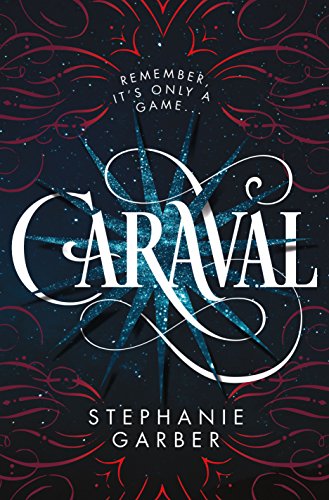
I've always had a hard time pinpointing what a "character arc" really is - point out most any book to me, and I'll look at the main character, shrug, and say "I have no clue what their arc is". But I think I'm slowly figuring it out. Like I said, a character arc is the way the character has made a turn around from who they were, to who they are now. And we have to be able to see that they've changed. Take a look at Scarlett from Caraval (by Stephanie Garber). In the beginning, she's brave, but doesn't know how to stand up for herself very well - and by the end, she's definitely learned how. I can't tell you too much without giving spoilers, but there it is. And it's a good example of a character arc! You could easily see where Scarlett started from, and how far she came.
So, how's your main character's arc looking? Have they changed from the person they were in the beginning? How? Is it a realistic change, considering what they've been through during the book? Compare your character to who they were in the beginning, and figure out how they've changed.
And there you have it - the last post in this series! I hope you guys were able to learn a lot about character building. I had some much fun discussing characters with you guys - and I'm excited to start a new series sometime in the next few months! If you have any questions about characters that I didn't address in this series, feel free to give them to me in the comments!
~ Savannah Grace
I hope you all enjoyed this series! Should my next series be another about characters, or should I move on to a different aspect of stories? Do you have any more questions about character building (or characters in general)?


